


How does high-precision brass strip empower precision electronics manufacturing with its micron-level tolerances and excellent conductivity?
Release Time : 2026-04-15
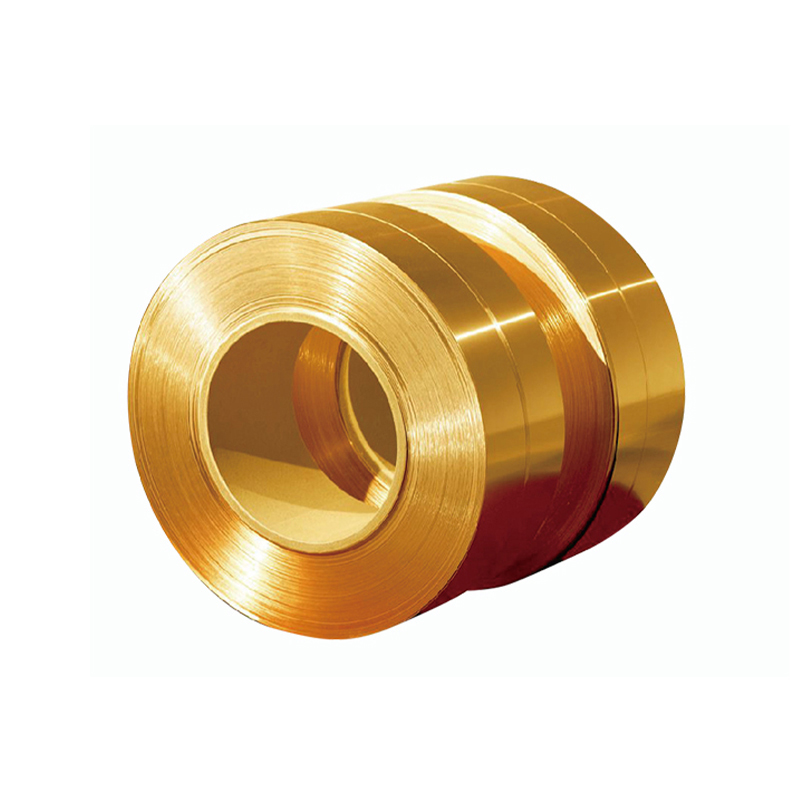
In the precision landscape of modern industrial manufacturing, high-precision brass strip flows like golden veins through the bodies of high-end industries such as electronics, new energy vehicles, and precision machinery. It is not ordinary metal strip, but an industrial cornerstone forged through vacuum melting, multi-pass precision rolling, and rigorous heat treatment processes. This material, with its extremely narrow thickness tolerances, excellent surface quality, and superior electrical and thermal conductivity, breaks through the performance limitations of traditional metal materials in the microscopic realm, elevating the mechanical strength and processing plasticity of copper alloys to new heights. It has become an indispensable key raw material for core components such as connectors, lead frames, and battery tabs, silently supporting the evolution of modern technological products towards thinner and higher-performance designs.
Micron-level thickness tolerances and ultimate surface quality establish the core position of high-precision brass strip in the field of precision stamping. In high-speed precision stamping production, material consistency directly determines the yield of the finished product. High-precision brass strip, utilizing advanced Sendzimir milling and constant roll gap control technology, minimizes thickness fluctuations, ensuring highly uniform specifications for every meter of strip. This extreme dimensional precision allows for stable feeding during high-speed stamping, effectively preventing issues like die jamming, chipping, or dimensional deviations caused by thickness variations. Simultaneously, its surface undergoes precision cleaning and bright annealing, resulting in a mirror-like finish, free of oxidation, oil, and scratches. This not only gives the finished product a beautiful metallic texture but also demonstrates excellent compatibility with subsequent processes such as electroplating and welding, ensuring uniform plating adhesion and strong solder joint bonding, providing a fundamental guarantee for the high reliability of electronic components.
Excellent electrical and thermal conductivity and mechanical strength address the performance bottlenecks of electronic components in the trend towards miniaturization. As electronic products become thinner and smaller, the volume of internal components is drastically compressed, posing stringent challenges to the performance density of materials. High-precision brass strip, while maintaining the excellent electrical conductivity of copper, significantly enhances its tensile strength and yield strength through the addition of trace alloying elements and grain refinement technology. This "high strength, high conductivity" characteristic allows it to withstand the severe deformation caused by high-speed stamping without cracking when processed into extremely thin terminals or leads, while maintaining low resistance and low heat generation under energized conditions, effectively preventing poor contact due to material fatigue or overheating. Especially in the high-voltage connectors and power battery tabs of new energy vehicles, this material can readily withstand high-current surges and complex vibration environments, becoming an "invisible guardian" ensuring energy transmission safety and stable equipment operation.
Excellent deep-drawing formability and corrosion resistance expand the application boundaries of brass materials in complex structural components. High-precision brass strip possesses excellent plastic deformation capabilities, adapting to complex cold-working processes such as deep drawing, bending, and edge rolling. When manufacturing complex shielding covers, heat sinks, or precision springs, it can closely conform to the mold contour, exhibiting minimal springback after forming and excellent dimensional stability, meeting the stringent requirements of high-end manufacturing for the geometric precision of components. Furthermore, brass inherently possesses excellent resistance to atmospheric and seawater corrosion, and after special surface passivation treatment, it is even more resistant to acid and alkaline environments. This allows high-precision brass strips to perform exceptionally well not only in indoor electronic equipment but also to maintain stable performance under harsh conditions such as outdoor communication base stations and marine engineering instruments, extending the lifespan of terminal equipment and reducing maintenance costs.
From the vacuum melting and purification of raw materials to the precise tension control during rolling, and the grain size management during finished product annealing, the production of high-precision brass strips embodies the highest wisdom in metallurgy and pressure processing technology. With micron-level precision, it controls the physical form of materials, supports the rapid development of electronic information with its excellent physical and chemical properties, and uses its tough yet flexible metallic properties to build a grand industrial civilization in the microscopic world. It has become a golden link connecting basic materials and cutting-edge technologies, interpreting the modern manufacturing industry's ultimate pursuit of "precision, accuracy, and stability".
Micron-level thickness tolerances and ultimate surface quality establish the core position of high-precision brass strip in the field of precision stamping. In high-speed precision stamping production, material consistency directly determines the yield of the finished product. High-precision brass strip, utilizing advanced Sendzimir milling and constant roll gap control technology, minimizes thickness fluctuations, ensuring highly uniform specifications for every meter of strip. This extreme dimensional precision allows for stable feeding during high-speed stamping, effectively preventing issues like die jamming, chipping, or dimensional deviations caused by thickness variations. Simultaneously, its surface undergoes precision cleaning and bright annealing, resulting in a mirror-like finish, free of oxidation, oil, and scratches. This not only gives the finished product a beautiful metallic texture but also demonstrates excellent compatibility with subsequent processes such as electroplating and welding, ensuring uniform plating adhesion and strong solder joint bonding, providing a fundamental guarantee for the high reliability of electronic components.
Excellent electrical and thermal conductivity and mechanical strength address the performance bottlenecks of electronic components in the trend towards miniaturization. As electronic products become thinner and smaller, the volume of internal components is drastically compressed, posing stringent challenges to the performance density of materials. High-precision brass strip, while maintaining the excellent electrical conductivity of copper, significantly enhances its tensile strength and yield strength through the addition of trace alloying elements and grain refinement technology. This "high strength, high conductivity" characteristic allows it to withstand the severe deformation caused by high-speed stamping without cracking when processed into extremely thin terminals or leads, while maintaining low resistance and low heat generation under energized conditions, effectively preventing poor contact due to material fatigue or overheating. Especially in the high-voltage connectors and power battery tabs of new energy vehicles, this material can readily withstand high-current surges and complex vibration environments, becoming an "invisible guardian" ensuring energy transmission safety and stable equipment operation.
Excellent deep-drawing formability and corrosion resistance expand the application boundaries of brass materials in complex structural components. High-precision brass strip possesses excellent plastic deformation capabilities, adapting to complex cold-working processes such as deep drawing, bending, and edge rolling. When manufacturing complex shielding covers, heat sinks, or precision springs, it can closely conform to the mold contour, exhibiting minimal springback after forming and excellent dimensional stability, meeting the stringent requirements of high-end manufacturing for the geometric precision of components. Furthermore, brass inherently possesses excellent resistance to atmospheric and seawater corrosion, and after special surface passivation treatment, it is even more resistant to acid and alkaline environments. This allows high-precision brass strips to perform exceptionally well not only in indoor electronic equipment but also to maintain stable performance under harsh conditions such as outdoor communication base stations and marine engineering instruments, extending the lifespan of terminal equipment and reducing maintenance costs.
From the vacuum melting and purification of raw materials to the precise tension control during rolling, and the grain size management during finished product annealing, the production of high-precision brass strips embodies the highest wisdom in metallurgy and pressure processing technology. With micron-level precision, it controls the physical form of materials, supports the rapid development of electronic information with its excellent physical and chemical properties, and uses its tough yet flexible metallic properties to build a grand industrial civilization in the microscopic world. It has become a golden link connecting basic materials and cutting-edge technologies, interpreting the modern manufacturing industry's ultimate pursuit of "precision, accuracy, and stability".